From Limited Resources to Limitless Reach: A Journey of Growth through Humanitarian Efforts
This international support and mentorship gave me a foundation that shaped every professional milestone thereafter.
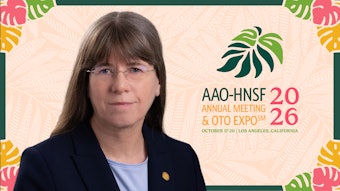
Deepa Shivnani, MBBS, MD, DNB, DPSM, on behalf of the WIO Leadership Development and Mentorship Committee
Deepa Shivnani, MBBS, MD, DNB, DPSMI come from India, a country where medical excellence meets the constant challenge of limited surgical resources. I had limited exposure to advanced airway reconstructions during the early years of my surgical training. Many centers lack access to balloon dilators, airway stents, and other essential equipment for open airway procedures. Many tracheostomized children waited years for decannulation due to a lack of airway experts. This scarcity of airway surgeons slowly created a silent crisis.
The burden of untreated cases was not just statistical, it was emotional. Every child with a tracheostomy represented a gap in training, access, and global equity. It was against this backdrop that I witnessed a humanitarian movement that changed the trajectory of my life.
Compassion travels farther than any map can show.
The Impact of Outreach
The story of humanitarian pediatric airway care in India began nearly two decades ago, when Deepak Mehta, FRCS, DLO, a visionary pediatric otolaryngologist from Texas Children’s Hospital, and Eswaran V. Raman, MBBS, DLO, MS, from Manipal Hospital in Bangalore, India, joined hands to create a model to redefine airway surgeries in the developing world.
Didactic session conducted by Dr. Mehta.
My medical journey changed profoundly through this humanitarian vision of the team of pediatric otolaryngology and airway experts from across the globe. Kishore Sandu, MD,from Switzerland, Shyan Vijayasekaran, MBBS, PhD, FRACS, from Australia, and many others from the United States, the United Kingdom, and Taiwan joined hands in the mission to train, operate, and mentor trainees like me.
Dr. Mehta’s dedication, devotion, and persistencebecame the backbone of this movement. He travels to India every year to train surgeons, perform complex airway reconstructions, and donate essential tools such as stents, tracheostomy tubes, endoscopic balloons, and dilators.
A moment of mentorship where surgical precision meets the spirit of giving.
Training and Building Competence Beyond Borders
As I was one of the recipients of these collaborative efforts, it changed not only my technical skills but also my professional identity. Through lectures, surgical demonstrations, direct case preparation, and presentation, I gained hands-on exposure to advanced airway techniques. This humanitarian support had an impact on me far beyond the operating room. It also helped me build evidence-based decision making, intraoperative judgments, and multidisciplinary team building. Zoom-based pre-operative planning and post-operative updates reinforced the mentorship loop even after the visiting faculty departed.
I remember days when I struggled with some post-operative challenges, but every visiting faculty member was promptly available with a response. Their consistency in teaching and their devotion to every patient became a model for my own practice. Their faithful shared teaching made each mission not just a surgical event but a transformative classroom.
These missions were more than academic exercises for me; in fact, they became my lifelines of learning. By using those donated stents and balloon dilators, which were otherwise beyond reach in a resource-limited setting, I could gain confidence in treating young patients. This international support and mentorship gave me a foundation that shaped every professional milestone thereafter.
Enabling Collaborative Learning through Surgical Missions
I performed a complex open airway reconstruction while Dr. Mehta stood beside me, guiding me through the critical stages of graft shaping and lumen restoration. These instances of mentoring alongside world-renowned airway surgeons help trainees like me refine every step of incision, graft placement, and stenting under their expert supervision.
During a similar surgery, which was telecast live to hundreds of attendees, Dr. Sandu guided me through the crucial steps of the procedure. At the time, the sense of responsibility was immense, but so was the inspiration. That moment defined my transition from fear to focus, and it ignited a lifelong belief in humanitarian efforts.
A trainee surgeon gains confidence when world-class surgeons step into a resource-limited country to share their wisdom.
The immediate impact of these surgical missions is clear: more than 2,600 children received advanced airway care through this program, with 87% successful decannulation rates. The long-term impact is even greater. More than 237 otolaryngologists participated in these workshops, and 137 attended multiple updates. Many have since established pediatric airway units in their regions, creating their own ripple effect of training and care.1
The impact of this humanitarian mission extended far beyond my own journey. Many women surgeons found their purpose and specialized direction through the same collaborative model.
“After my residency, I searched for a more meaningful path. The humanitarian pediatric airway training gave me advanced skills, a new value system, and belief that the best care can reach even the most underserved,” said Dr. Shruthi Kobal, Karnataka, India.“This training transformed my perspective and gave me the skills and purpose to deliver ethical, affordable, high-quality care.”
Training Local Providers, Transforming Global Futures
Global organizations like the AAO-HNS and the Society for Ear Nose and Throat Advancement in Children (SENTAC) help subsidize memberships and travel grants for international trainees like me. As a recipient of these opportunities, I was able to attend academic meetings to present our work, to learn, and to interact with world-renowned experts.
Trainees receive surgical simulation experience using an animal larynx to perform airway reconstruction.Upon returning home, I integrated the principles of evidence-based management, structured airway algorithm, and global quality improvement protocols, completely reforming my practice in India. Surgical protocols were modified, residents were trained through simulation and video learning, and surgical outcomes were improved. The trainees in India began to adopt structured approaches to airway management and post-operative plans.
From Recipient to Advocate
When I look back, I realize that every airway I reconstruct, every resident I mentor, and every family I comfort carries a piece of that shared humanitarian spirit. I am a product of global generosity, and proof that sustainable education can flourish even in resource-limited settings when compassion drives collaboration.
Simulation in our center in India includes tracheostomy training on dummies.Every new mentee, every workshop, and every collaboration reminds me of where it began in a small operating room in India with the voices of teachers who crossed oceans to stand beside me. Humanitarian education didn’t just teach me how to operate—it taught me how to uplift. I am not just a recipient of knowledge; I am a continuation of generosity.
Today, as a pediatric otolaryngology fellow at the University of Iowa, I carry forward that legacy. The spirit of “sharing and caring beyond borders” continues to guide my advocacy for equitable surgical education. Through the WIO Leadership Development and Mentorship Committee I now mentor others, especially women from developing countries who aspire to contribute globally but lack access to structured training.
The story and my journey within it reaffirm that when expertise travels, hope multiplies. The global outreach is not just about surgeries performed; it is about transforming the future.
Reference
Raman EV. Challenges of building a team where there is no stadium. Int J Pediatr Otorhinolaryngol. 2024 Jan;176:111789. doi: 10.1016/j.ijporl.2023.111789. Epub 2023 Nov 25. PMID: 38128355.
 Deepa Shivnani, MBBS, MD, DNB, DPSM
 Compassion travels farther than any map can show.
 Compassion travels farther than any map can show.
 Didactic session conducted by Dr. Mehta.
 A moment of mentorship where surgical precision meets the spirit of giving.
 A trainee surgeon gains confidence when world-class surgeons step into a resource-limited country to share their wisdom.
 Trainees receive surgical simulation experience using an animal larynx to perform airway reconstruction.
 Simulation in our center in India includes tracheostomy training on dummies.