Plain Language, Better Care: Improving Patient-Centered Guideline Materials
How the AAO-HNSF Research and Quality team is using human factors principles to make clinical guidelines more accessible for patients and clinicians.
Selena Briggs, MD, PhD, MBA; Kaitlyn Tholen, BS; Zarah Akrami, MPH

In particular, plain language summaries (PLSs) for clinical practice guidelines (CPGs) can translate evidence-based recommendations into language that is more approachable for a general audience. Effective PLSs have been shown to increase health literacy when they are clear, simple, and developed with the target audience in mind.1,2 In order to maximize comprehension and usability, it is recommended that patient-facing materials are written at or below a sixth grade reading level.3
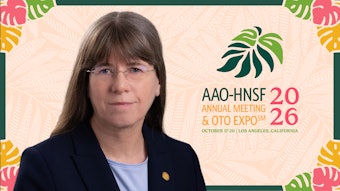
 (left to right): Kaitlyn Tholen, Dr. Selena Briggs, Zarah Akrami.
To address this issue, the team applied a Plan-Do-Study-Act (PDSA) framework to systematically improve the PLSs. Because there is no standardized workflow for developing PLSs at AAO-HNSF, this quality improvement approach allowed the team to evaluate outcomes and refine methods in a structured and iterative way. The pilot project focused on the PLS for the 2013 Bell’s Palsy CPG, which is currently undergoing an update and will be published in 2026. With the help of large language models, the text was simplified by shortening sentences, reducing complex vocabulary, and defining key medical terms while retaining essential clinical information. Following these revisions, readability analyses revealed a substantial improvement, reducing the reading level from approximately the 10th grade level to the seventh grade level. This initial attempt demonstrated a feasible and meaningful process to improve PLSs while maintaining guideline recommendations.
This work was grounded in principles of human factors engineering, which studies how humans interact with healthcare materials, environments, and systems. Human factors engineering “applies psychological and physiological principles to the design of products, processes, and systems.”4 When applied to patient education materials, human factors principles ensure that not only is the information written in understandable language, but also that it is presented, structured, and laid out in ways that patients can engage with it. PLSs represent one way to operationalize these principles for effective guideline dissemination.
“Our goal as providers is to equip patients with the knowledge and understanding needed to make informed decisions about their care—decisions that reflect their lifestyle, goals of care, and personal values,” said Dr. Briggs. “Collaborating with human factors experts to design patient-centered materials, and engaging volunteer patients to review them, can be invaluable in ensuring these messages are communicated clearly and effectively.”
As evidence continues to grow and patient population needs continue to diversify, it is important to evaluate and innovate how evidence-based information is shared. This includes developing a range of patient materials across different formats and modalities to support varied learning preferences and patient accessibility needs. Continued evaluation, testing, and refinement of AAO-HNSF PLSs will be essential to ensure they remain responsive to patient needs. Ongoing refinement of AAO-HNSF PLSs may also enable future translation into multiple languages, broadening access for international patient populations.
To understand how our efforts align with broader initiatives across medicine, the team recently presented at the Council for Medical Specialty Societies (CMSS) Annual Meeting in Washington, D.C. The theme of the conference was leveraging collective voices to enhance impact for physicians and patients, which provided an ideal forum to share AAO-HNSF's approach to improving patient communication. Speakers at the conference emphasized the need for clear communication for physicians as well, especially as they also navigate information overload, inconsistent messaging, and variable quality of online resources. Discussions at CMSS also reinforced that effective communication extends beyond written materials alone. Approaches such as advisory boards, patient and caregiver feedback, and social media content may complement traditional patient education materials in a way that is responsive to real-world needs.
The team also presented this work to the AAO-HNSF Guideline Task Force in December, which continued the dialogue about accessibility, dissemination, and quality improvement in AAO-HNSF's guideline development process.
As medicine grows increasingly complex, ensuring that patients can understand and use health information is both a responsibility and an opportunity. Through continued collaboration and innovation, the AAO-HNSF Research and Quality team aims to support clearer communication that benefits patients, clinicians, and the broader healthcare community.
References
- Sayfi S, Charide R, Elliott S, Hartling L, Munan M, Stallwood L, Butcher N, Richards D, Mathew J, Suvada J, Akl E, Kredo T, Mbuagbaw L, Motilall A, Baba A, Scott S, Falavigna M, Klugar M, Friessová T, Lotfi T, Stevens A, Offringa M, Schünemann H, Pottie K. (2023). A multimethods randomized trial found that plain language versions improved adults’ understanding of health recommendations. Journal of clinical epidemiology. https://doi.org/10.1016/j.jclinepi.2023.11.009.
- Dormer L, Schindler T, Williams L, Lobban D, Khawaja S, Hunn A, Ubilla D, Sargeant I, Hamoir A. (2022). A practical ‘How-To’ Guide to plain language summaries (PLS) of peer-reviewed scientific publications: results of a multi-stakeholder initiative utilizing co-creation methodology. Research Involvement and Engagement, 8. https://doi.org/10.1186/s40900-022-00358-6.
- Agency for Healthcare Research and Quality. Health Literacy Universal Precautions Toolkit. 2nd ed. Tool 11: Design easy-to-read materials. U.S. Department of Health and Human Services; 2015. Accessed December 15, 2025. https://archive.ahrq.gov/health-literacy/precautions/healthlittoolkit2.pdf
- MedStar Health. National Center for Human Factors in Healthcare. Accessed December 15, 2025. https://www.medstarhealth.org/innovation-and-research/national-center-for-human-factors-in-healthcare