From Practice to Policy: Understanding the AAO-HNS Board of Governors (BOG)
The BOG serves as the essential bridge between your local practice challenges and the Academy's national advocacy efforts. Here's how to tap into this powerful network.
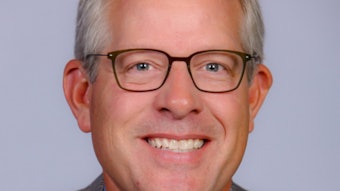
Stephen P. Cragle, MD, Chair, Board of Governors (BOG) Executive Committee
 Stephen P. Cragle, MD, Chair, Board of Governors (BOG) Executive Committee
The mission of the AAO-HNS Board of Governors (BOG) is to connect the AAO-HNS Board of Directors (BOD) with its local, state, regional, and specialty otolaryngology societies. Our primary role is to be a grassroots member network, helping the AAO-HNS enhance programs and policies by providing a communication channel for member feedback and ideas. The BOG fosters member engagement, particularly in legislative and policy efforts, by disseminating information and encouraging participation in the specialty's grassroots efforts.

AAO-HNS Governors come from local, regional, state, and specialty otolaryngology-head and neck surgery societies across the United States and Canada. These societies are organized under the guidelines of the BOG, and each recognized society selects a Governor to serve as their voting member at BOG meetings to act as a communication avenue between their societies and the BOG's Executive Board, helping to advise on programs and policies.
How does the BOG serve as a link between individual otolaryngologists, state societies, and the national Academy leadership?
Governors act as a bridge between individual society members and the Academy. BOG state and local representatives share information from the national Academy regarding legislative calls to action, socioeconomic trends, and other initiatives with their members. The BOG provides a forum for individual practitioners, regardless of practice setting, to get involved in the issues affecting the specialty. It strengthens and supports state and local societies by providing resources and coordinating advocacy efforts. The BOG functions as a "grassroots advisory body" to the AAO-HNS BOD to provide organized feedback and make recommendations on Academy programs, policies, and issues identified at the local level. BOG committees (e.g., Legislative Affairs, Socioeconomic and Grassroots) identify key issues impacting the specialty at local, state, and national levels and work with Academy staff to address them through national initiatives and advocacy efforts.
How does the BOG support state societies in strengthening local membership engagement, education, and practice management resources?
BOG representatives connect the national Academy with individual state societies, facilitating the two-way communication of information and member viewpoints. The BOG advances statewide policy recommendations by communicating with state society leaders and by supporting state legislative trackers. Additionally, it promotes and disseminates information regarding professional education, advocacy training, and guidelines developed by the national Academy to members at the state and local levels. The BOG develops and distributes practical tools and resources to help member societies operate effectively; an example is the Socioeconomic and Grassroots Committee (SEGR) toolkit to help state societies get started and function efficiently. The BOG also works with the other AAO-HNS Sections (i.e., Otolaryngology Private Practice Section, Section for Residents and Fellows-in-Training, Women in Otolaryngology Section, and Young Physicians Section) to advocate for the profession on Business of Medicine and policy issues related to working with Medicare and private payers.
How can state societies bring issues to the Academy via the BOG?
State, local, and specialty societies can bring issues to the BOG through their Governor and other designated representatives (such as the Legislative Affairs representative and the Grassroots Advocacy representative in some state societies), who serve as a bidirectional conduit of information and action between the grassroots membership and the Academy's BOD. Issues can be formally submitted for discussion, often as agenda items for BOG or committee meetings. Members and societies can also contact the BOG directly via ENT Connect to raise issues or find out who their representatives are.
How do state societies influence advocacy efforts through the BOG?
State societies can use the BOG to make recommendations regarding the Academy's programs and policies, ensuring that state-specific challenges and solutions are considered in federal and national advocacy strategies. Regional representatives within the BOG facilitate communication among different state societies to identify local trends, share effective solutions, and foster increased engagement through tools like an online interactive map and regular conference calls. In addition, the BOG and the Academy’s Advocacy team coordinate a network of volunteer State Legislative Trackers who monitor and analyze pending legislation in their respective states. These trackers work in tandem with their state societies and Academy staff to identify relevant bills, share information on national trends, and coordinate responses, thus influencing both state and national advocacy priorities.
How can I find out if my state has a society for me to get involved?
The best way to find out if your state has an otolaryngology society is by using the AAO-HNS BOG contacts map. This resource provides a current list of local, state, and regional societies.
What do BOG Regional Representatives do?
AAO-HNS BOG Regional Representatives act as a bridge between state and local societies in their geographic regions and the organization's BOG, serving as a crucial communication link. Their duties include relaying information and requests between local societies and BOG leadership, coordinating grassroots efforts, and facilitating member engagement. These representatives help advance the AAO-HNS's policies and programs at the regional level thereby bringing a unique perspective to issues affecting different areas of the country. They connect members with the specialty's legislative advocacy efforts, encouraging participation in programs that reach out to lawmakers. They act as a point of contact for members to voice concerns and queries to the BOG.
Where can I find information and updates about BOG-related work?
You can see what the AAO-HNS BOG is working on by visiting the AAO-HNS website, specifically the sections on Advocacy and Getting Involved. You can also go on social media channels, like Facebook, X, Instagram, and LinkedIn for updates and news from BOG and AAO-HNS. The AAO-HNS member publication, Bulletin, has regular articles and updates on BOG activities, and the BOG General Assembly held during the AAO-HNSF Annual Meeting & OTO EXPO is often the culmination of the year’s activities.
You can learn more about the BOG here.
2025-2026 BOG Officers
BOG Chair: Stephen P. Cragle, MD
BOG Immediate Past Chair: Cristina Baldassari, MD
BOG Chair-Elect: Eileen M. Raynor
BOG Secretary: John Werning, MD
BOG Member-At-Large: Scott Elledge, MD
BOG GOSE Chair: Katherine Kavanagh, MD
BOG Leg Affairs Chair: Dole Baker, MD
BOG SEGR Chair: Malaika Witter Hewitt, MD
BOG GOSE Vice-Chair: Evelyn Kalyoussef, MD
BOG Leg Affairs Vice-Chair: Michelle Liu, MD
BOG SEGR Vice-Chair: Yolanda Troublefield, MD, JD
BOG Nominating Committee: Christina Baldassari, MD (Chair), Brandon Baird, MD, and Scott Fortune, MD