The Case for Connection and Community
It's both humbling and inspiring to engage with our community of otolaryngologists across the globe, across borders, areas of practice, subspecialty, and beyond.
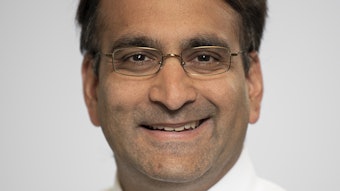
 Gene G. Brown, MD, RPh
AAO-HNS/F President
As I write this, I'm wrapping up an intensive 11-day journey connecting with colleagues through three important meetings. It's an honor to represent the Academy, and I'm continually inspired by the warm reception and meaningful exchanges with otolaryngologists around the world.
This extended trip came on the heels of a spirited debate among my practice’s leadership committee back in Charleston, South Carolina: What is the real value of meetings?
Two camps emerged. The first argues that meetings are invaluable—irreplaceable opportunities for education, networking, and information exchange that benefit both individuals and practices. The second contends that meetings add little value beyond what can be harvested online. You probably recognize both opinions in your discussions with your own colleagues.
My first stop was the Society of University Otolaryngologists Head and Neck Surgeons (SUO). To be honest, as a private practice doctor, I didn't even know I could attend. On the contrary, I was welcomed warmly and included in every conversation. I've become increasingly interested in residency selection and training, and I found the presentations compelling. Medical education is complicated and time-consuming—I left in greater awe of what our academic members accomplish daily in educating future otolaryngologists. This mission is vital and the folks at SUO are passionate in their pursuit of education. As someone on the back end of a career, this gave me great hope and reassurance for the future of our specialty.
 The AAO-HNSF was honored to join #panamorl2025 in Santiago, Chile, in November to connect with colleagues across the Latin American otolaryngology community.
Next stop was traveling from Washington, DC, to Santiago, Chile for the Pan-American Congress of Otorhynolaryngology. I was hosted by their President Jacqueline Alvarado, MD, and J. Pablo Stolovitzky, MD. This was my first international meeting, and I loved it. We share a close working relationship with our Pan American colleagues, many of whom are Academy members and attendees of our AAO-HNSF Annual Meetings. Santiago was beautiful, the food delicious, and I even brushed up on my Spanish—well, poquito español!
What I found most impactful in Chile was the thirst for knowledge. The hotel was packed with attendees, and the meeting was so over-attended that they had to bring in tents to place on the property! Our Academy was represented by nearly 80 members, most of whom served on the faculty, either presenting or participating in panels.
From Santiago, I headed to the Florida Combined Otolaryngology Meeting in Naples. The Florida Society's reputation for excellence is well-deserved—their meeting showcased innovative approaches to member engagement and education. State societies looking to enhance their programming would benefit from studying Florida's model.
The moment I walked in, my battery didn't just connect, it supercharged. The energy was pure, passionate, and unmistakable: a room full of people who have genuine passion for what we do.
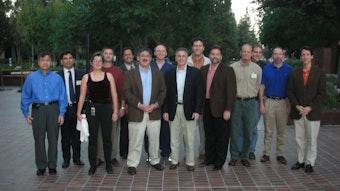
 Dr. Brown with the University of South Florida team during the FCOM Academic Bowl.
I share these reflections for two reasons. First, I want to bring you along on this journey throughout my year as AAO-HNS/F President so you can see what your Academy does on your behalf. Second, this global outreach and these connections matter—they strengthen our specialty worldwide. For me personally, it's both humbling and inspiring to engage with our remarkable community of otolaryngologists across the globe, across borders, areas of practice, subspecialty, and beyond.
Now, back to the Charleston debate about the value of meetings. If you are reading this article, then you likely side on the pro-meeting camp like me. I have a strategy for how I plan to share meeting value to those who are skeptical. I'm committed to bringing back concrete reports and actionable insights from every meeting I attend, sharing both the knowledge gained and the connections made. My goal is to show tangible benefits that will inspire my partners to attend future meetings themselves. I encourage you to do the same—help your colleagues see what they're missing.
As 2026 is before us, I hope to see you on the road this year. In the meantime, I'll continue to share what I'm learning and experiencing along the way, and I hope you will do the same.