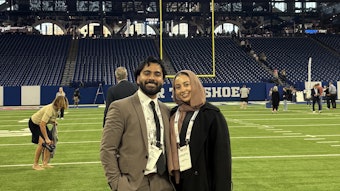
Fulbright Scholar Bridges U.S.-Japan Dysphagia Research Gap
Academy member studies oral frailty and innovative surgical techniques during year in Japan, expanding upon international collaboration focused on quality of life and patient care.
AAO-HNSF
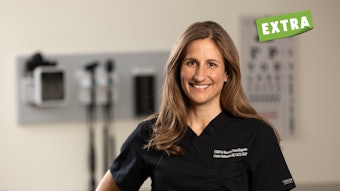
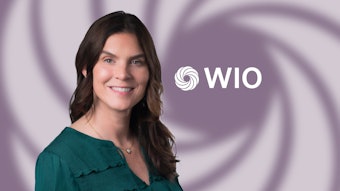
Anaïs Rameau, MD, MSc, MPhil, MS, Chief of Dysphagia at the Sean Parker Institute for the Voice and Associate Professor and the Director of New Technologies in the Department of Otolaryngology - Head and Neck Surgery at Weill Cornell Medical College, is spending her sabbatical year in Japan as a Fulbright Scholar, investigating novel approaches to dysphagia assessment and treatment that could transform care for aging patients in the United States.
The sabbatical represents a convergence of Dr. Rameau's personal and professional goals. With her Japanese husband and two young children, the family seeks to immerse their children in Japanese culture. But the year abroad is far more than a cultural experience—it's an intensive research collaboration at the University of Tokyo and Fujita Health University addressing critical gaps in geriatric dysphagia care.
A Fulbright Mission Inspired by Mentors
Dr. Rameau's path to the Fulbright Scholar Award was shaped by mentors from her Stanford residency. Lisa A. Orloff, MD, and F. Chris Holsinger, MD, both spoke highly of their Fulbright experiences in Europe and the career-defining impact of those opportunities. Louise Davies, MD, MS, who had previously received a Fulbright Scholar award in Japan, also provided valuable guidance as Dr. Rameau prepared her application.
 Food is central to Japanese culture. The team welcomes 2026.
Her Fulbright proposal centered on two novel Japanese perspectives in dysphagia assessment: the concept of "oral frailty" and the technique of dynamic swallowing CT.
Filling a Research Gap in Oral Frailty
Oral frailty was introduced by Japanese dentists who actively participate in swallowing care and perform diagnostic tests such as fiberoptic endoscopic evaluation of swallowing (FEES). Their expertise has led to heightened attention on oral function within the swallowing mechanism.
While prior literature has linked oral frailty with dysphagia as a symptom, Dr. Rameau's research addresses a surprising gap: no previous studies had evaluated the actual impact of oral frailty on deglutition dynamics. Using swallowing CT at both Fujita Health University near Nagoya and the University of Tokyo, she is conducting the first quantitative analyses of how oral frailty affects the mechanics of swallowing.
 Dr. Inamoto with images of dynamic swallowing CTs in her clinic room.
International Collaboration and Surgical Innovation
Dr. Rameau has known Dr. Ueha and Dr. Inamoto for many years and invited Dr. Ueha to serve as the guest of honor at the Dysphagia Surgical Society meeting held at the 2025 Combined Otolaryngology Spring Meetings (COSM), where Dr. Ueha presented on aspiration-prevention surgery.
During her Fulbright year, Dr. Rameau has participated in several central part laryngectomies for patients with profound swallowing dysfunction. According to Japanese neurology guidelines, this surgery is the procedure of choice for amyotrophic lateral sclerosis (ALS) patients who have difficulty managing secretions. The procedure is currently not performed in the U.S.
"The surgery is much shorter and safer than a narrow-field laryngectomy and with better postoperative swallowing outcomes," Dr. Rameau noted. She hopes to bring this technique back to the U.S. for patients who meet appropriate criteria, along with oral frailty assessment methods and swallowing CT techniques.
 Our team, following a successful aspiration prevention surgery.
A Career Devoted to Geriatric Dysphagia
Dr. Rameau's commitment to geriatric dysphagia extends well beyond her Fulbright year. As a National Institute of Aging (NIA)-funded faculty member, she currently serves as president of the American Society of Geriatric Otolaryngology and holds a faculty position in the division of geriatrics at Weill Cornell. Last year, she received the American Geriatrics Society's "Jeffrey H. Silverstein Memorial Award" for her work on using voice to detect swallowing dysfunction.
 International dysphagia symposium at Fujita Health University, September 2025.
Bringing Oral Frailty Screening to U.S. Patients
The international collaboration has already yielded tangible results. Dr. Rameau and colleagues from Michigan State University, the University of Iowa, New York University, the University of Wisconsin-Madison, and multiple Japanese institutions have successfully adapted the Oral Frailty Index-8 (OFI-8) for English-speaking senior adults in the U.S. The cross-cultural adaptation was published in the January 2026 issue of Otolaryngology–Head and Neck Surgery.
The OFI-8 is an eight-item, patient-reported questionnaire that screens community-dwelling senior adults for oral frailty risk. It addresses difficulty eating hard foods, coughing when drinking liquids, denture use, dry mouth, reduced social outings, ability to chew hard foods, tooth brushing frequency, and dental visit frequency. A score of four or more points indicates high risk and warrants further professional evaluation.
Research using the original Japanese version has shown that oral frailty is associated with a 2.4-fold increased risk of physical frailty, a 2.2-fold increased risk of sarcopenia, a 2.3-fold increased risk of disability, and a 2.2-fold increased risk of mortality.
Next Steps and Future Possibilities
The next goal is to validate the U.S.-English OFI-8 in patient populations and establish oral function as central to dysphagia evaluation and rehabilitation. Dr. Rameau acknowledges this may prove challenging in the U.S. context, where finding dentists interested in deglutition is difficult.
However, the possibilities are promising. Understanding oral function in senior adults could enable the development of novel foods that are both tasty and safe to swallow. Early detection through adapted screening tools could allow intervention before serious complications develop.
"Just like the concept of oral frailty has rapidly spread across East Asia, we hope our introduction of oral frailty in the U.S. will lead to more scholarships across the Americas and inspire effective solutions for our patients," Dr. Rameau said.
"Anais and I share a similar, forward-looking and proactive philosophy toward dysphagia care—one that builds on clinical experience while connecting it to future innovation,” said Dr. Ueha. “Swallowing function involves not only the pharynx and larynx, but also the oral cavity and the esophagus. From this perspective, the concept of oral frailty explored in this study is highly significant, as it emphasizes the importance of incorporating comprehensive oral function assessment into dysphagia care.
“Looking ahead, there are many potential future applications, such as integrating digital data on the intraoral environment into swallowing diagnostics and treatment,” concluded Dr. Ueha.
According to Dr. Rameau, this international collaboration has launched a long-term relationship in geriatric dysphagia among the participating institutions, with potential for continued partnership and innovation in this critical area of otolaryngologic care.
Disclosure: AI tools were used to assist in the creation of this article. All content has been edited and reviewed by humans.
Reference
Castillo-Allendes, A., Khoury, C.J., Curtis, J.A., Mocchetti, V., Kuroda, J., Kuroda, K., Ikeuchi, T., Saitoh, E., Inamoto, Y., Ueha, R., Matsuo, K., Rogus-Pulia, N., Molfenter, S., Tanaka, T., Iijima, K., and Rameau, A. (2026), Cross-Cultural Adaptation of the Oral Frailty Index-8 for United States English-Speakers. Otolaryngol Head Neck Surg, 174: 128-136. https://doi.org/10.1002/ohn.70047