From Dubai to Louisville: Why Business Education Can't Wait
The business of medicine represents a critical gap in our collective knowledge, and OTO Forum in Louisville will be the Academy's first step toward filling it.
 Gene G. Brown, MD, RPh
AAO-HNS/F President
The Global Education Multiplier
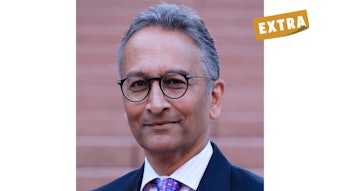
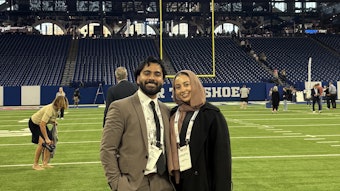
 Dr. Brown with Hussain Al Rand, MD, at the 15th EROC Global Forum in Dubai in January.
The mathematics of this influence are powerful: When educators connect across borders, they bring innovations back to their regions, improving patient care around the globe. This is critical to sustaining physician-led, evidence-based medicine worldwide and is essential to the future of the specialty.
But here’s what gave me pause. We’ve excelled at international clinical collaborations and education. However, we also need to ensure we provide the essential resources for our members to excel in the business of medicine side of practice. Addressing that gap is critical and has the potential to unlock tremendous value to us, our practices, and our patients.
The Deficit We Can't Ignore
I recently listened to Arlen Meyers, MD, MBA, an otolaryngologist and entrepreneur, discuss this exact challenge on an IndeDocs podcast. His thesis was sobering: the overall lack of business education among physicians has created a fundamental weakness that leaves us ill-equipped for today’s corporatized healthcare environment. Medical schools don’t teach it. Residency programs don’t prioritize it. We graduate brilliant clinicians who can navigate complex anatomy but struggle to navigate contracts, negotiate with payers, engage with politicians on policy, or understand the economics of practice sustainability.
The consequences play out daily:
In our practices, we face margin compression but lack the analytical tools to respond effectively. We cede autonomy to administrators armed with MBAs and dashboards while we focus on what we were trained to do—care for patients. The belt tightens. Frustration builds. Burnout accelerates.
With payers, we sit across the negotiating table from skilled professionals who systematically minimize our leverage. We watch our overhead increase 3% annually while reimbursement crawls forward at 1% or less—when it moves at all. Administrative burdens multiply. Audits intensify. Callbacks accumulate. Most of us have zero training in how to respond effectively.
In advocacy, when we articulate our value by simply asking for higher payments, politicians see us as self-interested. Frankly, the fragmented messaging across medicine hasn’t given them reason to think otherwise.
With scope creep, we face skilled, well-funded providers backed by high-paying lobbyists attempting to perform otolaryngology without equivalent training.
The result? We’re losing ground to more sophisticated adversaries in business, insurance, medicine, and politics. The tone on message boards reflects our collective frustration—lots of venting, not enough solutions. I refuse to accept this as our fate.
The Academy's Role in the Solution
A strong Academy provides leadership through this challenge. Our opportunity—perhaps our obligation—is to strengthen our members' business education so that knowledge of healthcare economics becomes a powerful tool for advocacy. Not just for medicine. Not just for physicians. Most importantly, for patients.
Healthcare must be physician-led. We’ve ceded this oversight incrementally over the course of decades. It’s time to reclaim it, and that starts with equipping our members with the skills to compete effectively in the business arena.
This isn't just a private practice issue. Department chairs need these skills. Training program directors need to understand these challenges. Young subspecialists entering their careers need this foundation from day one.
Dr. Meyers, I heard you. I appreciate the insight, and I intend to amplify this message through the Academy.
OTO Forum: From Diagnosis to Treatment

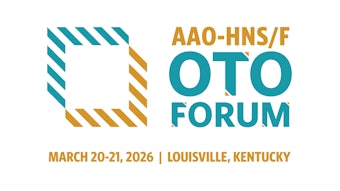
On March 20-21, 2026, the Academy will host the OTO Forum in Louisville, Kentucky, with the centerpiece topic being the business of medicine. Not as an afterthought. Not as a single session tucked into a packed agenda. As the program's featured, fundamental focus.
This isn’t your typical conference. OTO Forum is designed specifically for the challenges facing modern otolaryngology practice—whether private, academic, or employed. We’re bringing together experts in practice management, healthcare economics, payer negotiations, and advocacy to provide practical, actionable education.
If you’ve ever felt outmatched by an MBA-wielding administrator, outmaneuvered by a payer contract, or unable to articulate your value to legislators, this forum is for you.
The message board banter is full of frustration. Louisville will be a step toward creating solutions.
We need a diagnosis, and we need treatment options. We can't keep sitting around and complaining because we feel bad. The business of medicine represents a critical gap in our collective knowledge, and the OTO Forum in Louisville will be the Academy's first step toward filling it.
One Voice, Many Solutions
This education initiative fits naturally within my One Otolaryngology—Head and Neck Surgery presidential theme. Our specialty encompasses multiple subspecialties, each with distinct clinical focuses. But on issues of business viability, reimbursement sustainability, and healthcare policy, we must speak with coordinated voices informed by shared knowledge.
The future of otolaryngology—whether practiced in Charleston, Dubai, or your own community—depends on our willingness to evolve beyond pure clinical expertise. We must develop business acumen not as a distraction from patient care, but as a necessary tool for sustaining it.
I hope to see you in Louisville. It’s time to get to work.