New AI Tool Shows Promise in Diagnosing Brain Tumors without Surgery
Study published in OTO Journal demonstrates 97.55% accuracy in distinguishing pituitary macroadenomas from parasellar meningiomas using automated machine learning.
From the AAO-HNS
 Elliott M. Sina, BA, lead author, presented the study and findings at the AAO-HNSF 2025 Annual Meeting & OTO EXPO.
The study, published in the December 2025 issue of Otolaryngology–Head and Neck Surgery and presented at the AAO-HNSF 2025 Annual Meeting & OTO EXPO, in Indianapolis, Indiana, represents the first application of AutoML technology specifically trained to classify pituitary macroadenomas and parasellar meningiomas—two benign but challenging-to-distinguish brain tumors that require different treatment approaches.
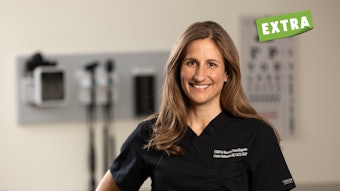
 Gurston G. Nyquist, MD, author
“While multi-institutional validation and careful integration into clinical workflows are warranted, this study represents an important step in the development of reliable tools that may improve skull base tumor diagnosis in both community and tertiary care settings,” he continued.
Why This Matters
Accurate preoperative diagnosis is crucial in these tumors as they require significantly different surgical approaches and treatment strategies. Unlike many other tumors, brain masses are rarely biopsied before surgery, making accurate imaging interpretation essential. Misdiagnosis can lead to inadequate surgical preparation, prolonged procedures, or suboptimal outcomes.
According to the authors, the accuracy of MRI interpretation varies significantly—ranging from 82.6% to 96.7%—depending on clinician expertise and institutional experience; it can be difficult to differentiate these tumors because they share overlapping features on imaging.
Key Findings
The research team analyzed 1,628 MRI images from 116 patients and achieved remarkable results:
- Overall accuracy: 97.55% at standard confidence thresholds
- Pituitary macroadenomas: 97% sensitivity, 98.96% specificity
- Parasellar meningiomas: 98.41% sensitivity, 95.53% specificity
- External validation on 959 additional images confirmed the model's reliability
Clinical Implications
The model's ability to adjust confidence thresholds after development makes it particularly versatile for different clinical settings:
- High-sensitivity mode (99.39% sensitivity) could benefit community screening settings with limited specialist access
- High-specificity mode (99.31% specificity) may reduce false positives in high-volume tertiary care centers
The technology could serve multiple purposes, including:
- Assisting in preliminary evaluations and triage
- Expediting referrals to skull base specialists
- Improving preoperative surgical planning
- Providing educational support for residents and fellows
Looking Ahead
The research team plans to expand the model by incorporating additional imaging modalities, clinical metadata such as hormone levels, and multi-label classification to identify coexisting pathologies. They also envision applications beyond skull base surgery, including potential use in thyroid nodule assessment and laryngoscopic lesion evaluation.
Reference
Sina EM, Limage K, Anisman E, et al. Automated Machine Learning Differentiation of Pituitary Macroadenomas and Parasellar Meningiomas Using Preoperative Magnetic Resonance Imaging. Otolaryngology–Head and Neck Surgery. December 2025. DOI: 10.1002/ohn.70034