Private Practice Otolaryngology Meets the Future Head-On at OTO Forum 2026
The sessions consistently reinforced that physicians who understand the business of their practice are better positioned to advocate for their patients, retain talented staff, invest in the right technology, and serve their communities over the long term.
AAO-HNS/F
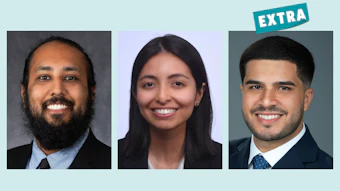
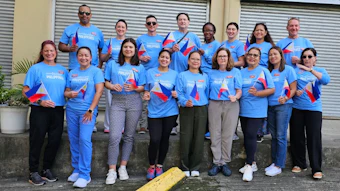
 Resident representation at the 2026 OTO Forum.
The AAO-HNS/F 2026 OTO Forum convened more than 200 otolaryngologists, practice administrators, residents, fellows, and exhibitors in Louisville, Kentucky, on March 20-21, for two days of engaged, practice-focused education. Organized by the Otolaryngology Private Practice Section (OPPS), the meeting featured programming for physicians across all practice areas as well as specific education for residents. In a meaningful show of that ongoing commitment, OPPS awarded 15 resident travel grants to help the next generation of ENT surgeons attend.
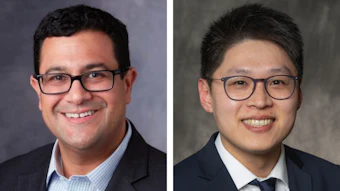
 Gene Brown, MD, RPh, opens the 2026 OTO Forum with remarks along with Rahul K. Shah, MD, MBA (left) and Daniel R. Gold, MD (right).
OPPS Chair Daniel R. Gold, MD, shared that the program was specifically focused on practice sustainability, financial and operational performance, technological advancement and utilization, leadership and peer collaboration, and alignment on federal and state advocacy priorities. “We are here to bring value. Everybody here has busy practices, and you all have taken time off from your practices to come here, so we are going to give you a return on your investment. We hope to be a forum and a place where many of the issues we face can be worked through and optimized so that we can continue to do what we do to take care of our patients.”
The State of Private Practice
The 2023 and 2025 Otolaryngology Workforce Reports were cited throughout the two days, reflecting the diversity of practice models available to ENT surgeons today.
Across more than a dozen sessions, most presenters agreed on a foundational premise: Physicians are highly trained to assess complex otolaryngologic conditions and execute and manage treatment plans, yet the business fundamentals of how practices are structured, how revenue flows, and how long-term sustainability is achieved are rarely taught during training.
Understanding the Infrastructure
 Attendees engaged in the discussion during the 2026 OTO Forum.
The sessions consistently reinforced that physicians who understand the business of their practice are better positioned to advocate for their patients, retain talented staff, invest in the right technology, and serve their communities over the long term. The goal is sustainability in patient care and in the care of one’s community, and sustainability requires understanding.
Operations, Staffing, and the Patient Relationship
 Attendees enjoying the time to network and connect with peers and exhibitors during the Friday evening Networking Reception.
Financial understanding and performance do not happen in a vacuum. They are the downstream results of operational decisions made every day. Multiple sessions addressed the mechanics of running a well-functioning practice:
- How revenue cycle management works and where money is lost
- How to read a profit and loss statement
- What key performance indicators actually matter
- How to use data to identify inefficiencies before they become crises
 Attendees enjoying the time to network and connect with peers and exhibitors during the Friday evening Networking Reception.
Patient engagement and retention emerged as both operational and a strategic priority. In a consolidating market, sustainable practices are those that make it easy to secure an appointment, create a memorable experience, and own the downstream episode of care. Access speed, portal adoption, follow-up capture rates, and net promoter scores are not just administrative metrics; they are the levers that determine whether a patient stays in your ecosystem or drifts to a competitor.
A marketing session, “Maximize Your Reach: Marketing Strategies for ENTs on Any Budget,” moderated by Srinivas R. Kaza, MD, approached this through a complementary lens, introducing frameworks for understanding where a practice sits in its local market and what strategies are appropriate at each stage of growth.
Sleep Apnea as a Service Line—and a Symbol
 David E. Melon, MD moderates the session “Sleep Apnea 360 Degrees: Building a Profitable, Patient-Centered Practice,” with panelists left to right Drew Franklin, MBA, FACMPE, Keith Matheny, MD, and Deanne Nyland, MD.
Technology, AI, and the Platform Shift Ahead
No meeting in 2026 would be complete without a serious conversation about artificial intelligence (AI), and the OTO Forum delivered two sessions that balanced enthusiasm with pragmatism. The first, “Technology and AI in Otolaryngology,” moderated by Dr. Bichey, framed AI as a foundational platform shift; not a set of tools to be bolted onto existing workflows, but a technology that will reshape how medicine is organized and delivered, in ways that will advantage those who engage early and disadvantage those who wait.
The second session, “Optimizing Revenue through Optimized Coding, Billing, and Compliance" moderated by Eli R. Groppo, MD, translated that framing into practical risk management: what questions to ask AI vendors, how to evaluate HIPAA compliance and data security certifications, what the regulatory landscape looks like, and why the physician remains legally responsible for every AI-generated note regardless of how it was produced. The clinical pearl was simple but important—treat AI like a capable junior staff member: helpful but always supervised.
Advocacy: The Fight That Makes Everything Else Possible
 Stephen P. Cragle, MD, moderates the session, “Cutting through the Red Tape: State-Level Advocacy and the Fight Against Prior Authorization.” Left to Right: Dr. Cragle, Anna Hall, John Werning, MD, and Eileen Raynor, MD. Not shown from the panel is Aaron Costello, CAE.
Threading through the entire meeting was a consistent reminder that none of the financial strategies, operational improvements, or technology investments discussed over the two days will matter if the legislative and policy environments continue to erode patient care and physician payment and expand administrative burden.
The advocacy sessions covered the full landscape: state-level prior authorization reform, federal legislation infiltrating patient care and safety, the CMS WISeR Model introducing AI-powered prior authorization for procedures including hypoglossal nerve stimulation, and the long-running fight for rational Medicare physician payment.
Immediate Past AMA President Bruce Scott, MD, and AMA President Bobby Mukkamala, MD, both otolaryngologists, addressed attendees, calling for a unified profession and reminding the room that advocacy is not someone else's job.
 Left to Right: AMA Immediate Past President Bruce Scott, MD, AAO-HNS/F President Gene Brown, MD, RPh, AMA President Bobby Mukkamala, MD.
A Community Built for This Moment
What distinguished the 2026 OTO Forum was not any single session but the cumulative effect of two days of honest, practical, peer-to-peer conversation about what it takes to build and sustain practice in today's healthcare environment. The residents who attended on travel grants sat in the same room as physicians with decades of ownership experience. Administrators and clinicians problem-solved together. The 35 exhibitors on hand over the two days demonstrated tools designed to address the realities of practice and patient care.
The next opportunity to engage with your colleagues and peers is the AAO-HNSF 2026 Annual Meeting & OTO EXPO in Los Angeles, California, October 17-20, where the OPPS leadership will continue building the community and the resources that private practice otolaryngology needs to thrive.