Fired Up—and the Numbers Prove It!
When the full breadth of our specialty (academics and private practices) unites around a common cause, our voice carries further and our influence deepens.
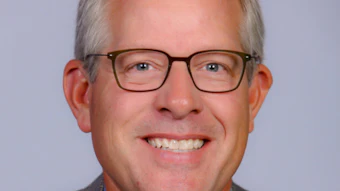
 Rahul K. Shah, MD, MBA
AAO-HNS/F Executive Vice President and CEO
By every meaningful measure, 2025 was our strongest year for the PAC in over a decade. We raised more than $190,000, a 26% increase over 2024, and our best showing since 2012. The First 50 Campaign, which kicks off each year and sets the tone for what's to come, just closed its most successful cycle ever. In 2026, we raised $124,241 from 135 contributors compared to $94,961 from 98 contributors the year prior. Our First 50 members? We hit 92, up from 64 in 2025. This isn't incremental progress. This is momentum.
I want to say something directly to each of the more than 300 members who invested this year: Thank you. On behalf of our 13,000+ member community, your personal commitment is what makes everything else possible. The Advisors, with Matthew D. Scarlett, MD, as Chair, have made this success possible; for this, both our members and the specialty are grateful.
Results like these don't happen by doing business as usual. Last fall, I challenged our team to stop thinking incrementally and start thinking about what it would take to grow not by 10% or 20%, but by an order of magnitude. That challenge was inspired in part by Dr. Benjamin Hardy and Blake Erickson's The Science of Scaling, which makes the business case that linear growth is often a sign of stagnation, and we should not be shy about pursuing more aggressive targets. We took that seriously. We brought in outside expertise, tried different approaches, and built new muscle around how we engage members in our advocacy mission. The numbers above are early proof that it's working.
One trend particularly energizes me. Historically, our PAC investor base skewed roughly 80% private practice and 20% academic, which may reflect how the financial stakes of advocacy feel more immediate in different practice settings. That ratio has shifted dramatically to approximately 55% private practice and 45% academic. This is significant. When the full breadth of our specialty (academics and private practices) unites around a common cause, our voice carries further and our influence deepens. This is what unifying our specialty looks like in practice.
That unity is reflected in how ENT PAC deploys your investments. We contributed $130,500 in 2025 to federal lawmakers across both sides of the aisle, with an almost even 50/50 bipartisan split. Our mission has never been partisan; it is purposeful. We support the legislators who support us, and we work to build relationships with candidates and members of Congress through events and direct engagement, amplifying the voice of otolaryngology on Capitol Hill. Indeed, when we’re not at the table, decisions on our specialty are being made without us.
I'm also proud to note that all our AAO-HNS/F elected officers are First 50 investors. They give not only their time and expertise to guide our Academy, but their personal dollars to advance our collective advocacy.
The results of this sustained investment are showing up in ways both visible and quiet. Suffice it to say, our advocacy team's reputation in Washington, DC, is growing. We are, as I've heard more than once from those who work the halls of Congress, beginning to "punch above our weight." I'll take that.
None of this happens without you. If you haven't yet invested in ENT PAC, I hope this moment—our most successful year in over a decade—inspires you to join us. And if you're already an investor, know that your investment is being put to work thoughtfully and across the aisle, on behalf of your patients and your practice.
The work continues, and it's stronger when more of us are part of it.
As is my practice, I want to be transparent about the fact that this column was drafted in collaboration with Claude, Anthropic's large language model.
*Contributions to ENT PAC are not deductible as charitable contributions for federal income tax purposes. Contributions are voluntary, and all members of the American Academy of Otolaryngology–Head and Neck Surgery have the right to refuse to contribute without reprisal. Federal law prohibits ENT PAC from accepting contributions from foreign nationals. By law, if your contributions are made using a personal check or credit card, ENT PAC may use your contribution only to support candidates in federal elections. All corporate contributions to ENT PAC will be used for educational and admin