Stories from the Road: Addressing Domestic Underserved and Under-Resourced Populations Inside the U.S.
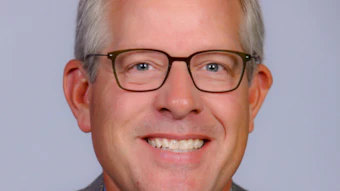
The case for improving follow-up care and treatment for hearing impaired children in rural Kentucky: A conversation with Matthew Bush, MD, PhD, MBA, Professor and Chair, Department of Otolaryngology- Head and Neck Surgery, University of Kentucky Medical Center.
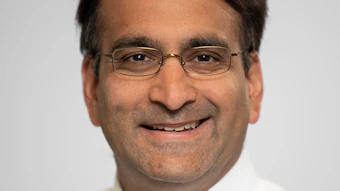
Alfred M. Sassler, DO, on behalf of the Humanitarian Efforts Committee
 Alfred M. Sassler, DO
Unfortunately, we often see them in our clinics and hospitals with late presentations of diseases that could have been mitigated if seen sooner. Earlier presentation may have prevented progression, long-term suffering and financial loss for the patient, their family, and society as a whole. We all know that there are significant access gaps in our healthcare system that present their own set of challenges. Do these challenges provide opportunities for motivated folks to try to intervene? I suspected so and set out to find examples.
Pediatric Hearing Impairment in Rural America
Most of us are aware of initiatives that are quite common around our academic health centers and religious organizations that provide charity care to many marginalized folks, mostly in inner-cities and some rural sites. These programs depend on philanthropy (in the form of donations and foundation grants) to treat as many people as possible but the funding is not as predictable or as sustainable as regular care (in our system, that means third-party payers supplemented by employers and individuals, or government subsidized programs). We can leverage our teaching role to provide more personnel but this is not a long-term work force for these programs and our learners need to be supervised by fully credentialed volunteer faculty. These programs are also limited by which diagnostic studies, medications, and other treatments they can offer to the recipients. This discussion is not to cast aspersions on these valuable programs but simply to underscore that their effect is limited.
My query: What problems have been recognized to cause significant suffering and altered life course for marginalized populations, that we know how to treat but have not been able to address due to specific challenges of these populations? One answer is pediatric hearing impairment in rural America.
We seem to have achieved near-complete universal newborn hearing screening by Otoacoustic Emission testing (OAE). Karl White, PhD, at Utah State University and others have proven the efficacy of this screening and there has been buy-in by politicos and the public, allowing the test to be done nearly universally in U.S. hospitals. Dr. White and colleagues did not expect, however, that when infants screen abnormally, they are frequently not getting the timely follow-on care to address the problem. The sad reality, especially in rural populations, is that 25% of those children are lost to follow-up and further evaluations do not happen in time to mitigate any permanent losses, progression, or sequelae. Additionally, they often do not have access to hearing habilitation technology and classroom help to mitigate the language and learning difficulties associated with hearing loss.
With hearing impairment, a child will potentially have impaired speech development, learning impairment, hindered social development, diminished educational performance, higher incidence of behavioral issues, and eventually, diminished employability. This leads to more dependency on family for support along with government assistance and ultimately greater burden on society. In fact, in 2000 the CDC estimated the lifelong cost to our economy of infant hearing loss to be 2.1 billion dollars (likely a conservative estimate in year 2000 dollars, presumably, much higher currently). There are also incalculable losses of potential talent for our workforce. Who knows how many hearing-impaired teachers, nurses, scientists, plumbers, carpenters, electricians, engineers, architects, and others are being prevented from fulfilling their potential? Unfortunately, theoretical losses are not the tangible outcomes that allow for the political wherewithal to secure increased funding.
Crafting Potential Solutions with Local Stakeholders
The solution would seem to be proper and timely referral to appropriate clinicians (otolaryngologists, audiologists, educational interventionalists, social workers, psychologists, professional counselors, etc.). They would provide complete evaluation of the hearing loss, determine reversibility, and recommend early intervention using hearing assistive devices, amplification, medical treatments, surgical treatments including cochlear implantation if indicated, and/or possible gene therapy. This would also allow determination of the need for Individual Educational Programs (IEPs) in the classroom and be able to service those needs. These interventions would be expected to lead to improved behavioral and educational achievement, improved employability, improved social development, and less strain on families. This should also result in improved socioeconomic status, which relates to potentially greater tax revenue, greater utilization of talent, and overall societal benefit.
 Matthew Bush, MD, PhD, MBA
 Dr. Bush in the Outreach Clinic with a patient and staff audiologist.
He started his journey to improve the efficiency and effectiveness of the Kentucky EHDI program by partnering with the Kentucky Cabinet for Health and Family Services. Through this partnership, he demonstrated that rural children are more likely to be lost to follow-up compared with their urban peers. Parents of children with hearing loss lack support through the complex process of hearing loss diagnosis and intervention. Risk factors of non-adherence to follow-up include rural residence, low level of parental education, low socioeconomic status, and public insurance. Distance from the hearing testing centers has also been correlated with the time to diagnosis. These are the exact factors prevailing in much of rural Kentucky and throughout Appalachia that define this marginalized population.
Early in his academic career, Dr. Bush recognized these facts and began focusing on the issue by gathering statistics demonstrating the problem. Like any good, early career academic physician, he produced multiple studies and publications on the topic. He rapidly realized that simply producing papers was not going to effectively fix the problem, nor would it magically get the stakeholders to repair the situation.
I asked him what the key factor was that generated his eventual success in making a difference for this population. His answer: “I realized that I had to go visit these people and find out, from them, what they needed.” He had to meet the stakeholders in the communities, council chambers, state agencies, rural clinics, town councils, community advocacy groups and parent/citizen focus groups to find out where the roadblocks were in order to craft potential solutions. He described “whistle stop” tours around the state to get this done. He also noted that during COVID-19 this was particularly difficult because virtual meetings were not nearly as effective as speaking eye-to-eye, in person, with these folks.
Of note: In my reading and experience with Humanitarian Outreach, these seem to be key points that are often reported by leaders of successful projects wherever in the world they are being performed. One needs to go into the field, interact and meet with stakeholders and ask them what they need, not assume you know the solution.
Dr. Bush realized that there was a breakdown at the level of parental and community understanding of the ramifications of the issue, difficulty knowing what is necessary for next steps to happen, and how important timely intervention is to the outcome of this unique problem. A key seemed to be in “navigating” the system. That struck a familiar nerve due to his awareness of the success of patient navigation with our colleagues in head and neck oncology. He was aware of a couple of decades of data showing success with this technique in improving care follow-through for these often marginalized patients. He developed a Patient Navigation training program by adapting evidence-based core modules from the oncology field, many of which applied directly to this population. The Bush team was then able to design additional disease specific modules to round out the training. He also developed a feedback and evaluation system to ensure training was successful for those who chose to become navigators for pediatric hearing loss patients.
He next looked at the existing infrastructure for healthcare outreach in rural under-resourced communities within Kentucky. As to funding and advocacy, he considered grants to study outcomes from the National Institute on Deafness and Other Communication Disorders (NIDCD), part of the National Institutes of Health (NIH). He was aware of and already involved with clinics in underserved communities around the state that were underwritten by the Kentucky Cabinet for Health and Family Services. He and his colleagues designed a study (with NIH funding) to investigate the ability and effectiveness of placing trained patient navigators (PNs) within the system already in place to care for these marginalized populations. The study was called Communities Helping the Hearing of Infants by Reaching Parents (CHHIRP) through Patient Navigation: A Hybrid Stepped-Wedge Trial Protocol.1 This is a novel study design with somewhat unfamiliar statistical analysis (to me). However, the publication describes very well the thought processes and design of the “type 1 hybrid effectiveness-implementation study with a stepped-wedge trial” design and why it was chosen for this problem.
A central part of the study was the formation and engagement with a Community Advisory Board (CAB) comprised of parents, teachers, audiologists, SLPs, education interventionalists, mental health providers, state program administrators, and others that provided input with selection of the study design, selection and training input on PNs, evaluation of PNs, dissemination of results, etc. They continued to meet quarterly to provide input as the protocol progressed into all state-wide clinics. This active oversight and input are a key to the successful ongoing implementation of the program.
My next question for Matt: “Given the success that this study demonstrated, how do you scale it up?” He very happily responded that the administrators of the state-funded clinics decided to make it part of their entire system. Research has shown that when a program is a systemic part of a healthcare organization, the implementation rate is much higher than an intervention that has to be remembered and referred to in addition to all the other aspects of the provider’s responsibilities. Outcomes continue to be collected; however, there is no doubt that this was a great step forward that markedly improved implementation of the EHDI 1-3-6 guidelines in a previously very difficult to reach cohort of patients. We will continue to see the fruits of this study as Dr. Bush and his colleagues document ongoing data and report longitudinal outcomes.
Dr. Bush and his Kentucky colleagues have teamed up with another champion of hearing health outreach, Susan D. Emmett, MD, MPH, from the University of Arkansas for Medical Sciences where she is a professor in the Otolaryngology Department whose research focuses on equity-minded hearing health outreach for the state of Arkansas and around the world. She had previously demonstrated remarkable improvement in outreach to underserved populations in Alaska. They have joined forces to form the Appalachian Specialty Telemedicine Access for Referrals (App-STAR) trial. Again, a hybrid effectiveness implementation stepped-wedge cluster-randomized controlled trial was initiated to evaluate methods for improved hearing healthcare in school age children in Appalachian, eastern Kentucky counties with hearing screening and then follow-up utilizing telehealth technology already in place at pre-existing rural clinics with the schools being the primary access site for the patients. Dr. Emmett and her colleagues had already studied this idea in rural Alaska in a Patient-Centered Outcomes Institute (PCORI)-funded trial utilizing existing telehealth infrastructure in the rural Alaska Tribal health system to follow-up on school hearing screening. This study is ongoing and can be reviewed.2
What’s Next?
Are there any more ideas in the works by Dr. Bush and others? You bet there are! Matt mused this question to me: “We get notified on our cell phone when there are security incidents or unexpected closings at our kids’ schools, why not send parents text notifications when our kids have abnormal health screenings (like hearing and vision)?” Again, leveraging existing infrastructure to improve healthcare for populations. No study yet, but knowing him, we should just stand by.
In my final question for Matt, I asked why he does this particular line of research. It is not, after all, likely to generate lots of new revenue or resources for those individuals and departments involved with it. He responded that it has been his passion since the birth of his career because he saw a need and it improves patients’ lives. We then had a bit of a discussion about how easy it is to get burned out, even in a profession we love, with the day-to-day “hamster wheel” existence of chasing RVUs, administrative duties, committee meetings, regulatory requirements, on-call responsibilities, practice administration, etc.
We agreed that it is important to have “passion projects” that bring us back to why we went into medicine in the first place. As anyone who has done humanitarian outreach work, whether domestic or global, knows, the feelings we are left with are often what motivated us to go to medical school at the outset of our rigorous calling. I am now retired from my academic career but find excitement and great fulfillment in outreach work. To my earlier career colleagues, I say: “Jump on in, the water is wonderful!” Thanks for your attention. I’ll see you “Down the Road!”
View this infographic comparing hearing outcomes for rural vs. urban infants.*

References
- BJM Open. 2022 Apr 18;12(4): e054548.doi:10.1136/bmjopen-2021-054548
- JMIR Research Protocols. 25 Aug 26;14: e77630.doi:10.2196/77630