Caring for Children with Cleft and Craniofacial Differences
Specialties working together to advance care for pediatric patients embody the adage, “the sum is much greater than the parts.”
Lisa Morris, MD, Phayvanh Pecha, MD, MPH, and Brianne Roby, MD, on behalf of the Otolaryngology Cleft and Craniofacial Committee

Cleft lip and palate are the most common congenital differences of the head and neck, affecting around 7,000 individuals each year in the United States.1 The management of this condition relies on a team approach to ensure best practices and optimal patient outcomes. The American Cleft Palate Association has established standards of care to ensure that multidisciplinary teams can provide consistent, patient-centered care.2
Otolaryngologists can have multiple roles on the cleft or craniofacial team. This can include treating otologic problems such as ear tubes, managing challenging airways in infants with Robin sequence, and performing cleft lip repair. One of the most critical aspects of multidisciplinary team care is that various experts can come together to foster relationships under shared goals. This collaboration has been shown to reduce care fragmentation, enhance patient outcomes, and improve family and patient experiences.
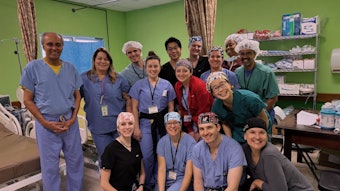
Specialists from diverse backgrounds, including reconstructive surgeons (from facial plastic and reconstructive surgery, pediatric otolaryngology, plastic surgery, or oromaxillofacial surgery), otolaryngologists, speech-language pathologists, audiologists, dentists, orthodontists, nurses, social workers, pediatricians, geneticists, and psychologists, regularly contribute to joint meetings. These frequent structured meetings not only facilitate collaborative problem-solving and information sharing but also create a culture of respect and humility. Each team member feels safe contributing to patient treatment plans and can welcome others’ expertise to fill knowledge gaps. As stated by one of our speech-language pathologists, “Strong relationships within the cleft team directly correlate to improved care. When otolaryngology engages speech pathologists as equal partners, it helps ensure that surgical planning, speech, and feeding outcomes are aligned. It allows families to feel the strength of the team care and comfort that their providers are all working together.”
The multidisciplinary approach in cleft teams improves cohesiveness, ensures proper sequencing of care, and streamlines the treatment plan. It also provides structured time to gather expert opinion in the absence of clear guidelines, delivers a unified message to families, and improves provider confidence in the treatment plan.3
Building Interpersonal Connections
Building interpersonal connections leads to trust and teamwork, which are key to enhancing patient outcomes. Collaboration among team members facilitates a sense of teamwork and reduces fragmentation of care, which can occur when specialties work separately in their own fiefdoms. This reduces the financial and logistical burden on families who must coordinate with multiple specialists individually. An interdependent team model promotes better satisfaction and cohesive care, thereby improving the quality of care for patients with craniofacial differences. This consistent support from team members also helps form strong, long-term bonds with families.
Children with cleft lip or palate represent a unique and complex patient population. Many have lifelong medical, surgical, developmental, and psychosocial needs. These congenital anomalies affect multiple functional domains—including feeding, breathing, hearing, speech, dental health, facial growth, and appearance—beginning at birth and persisting through childhood into adulthood. Care often begins in the prenatal period with counseling, and surgical intervention starts in the first few months of life, continuing in stages through early adulthood. Jaw and nasal reconstruction are typically completed after skeletal maturity, though many patients require ongoing care well beyond that point. The surgical course for cleft patients typically involves an average of five to 10 staged surgical procedures4 focused on lip repair, palate repair, alveolar bone grafting, speech optimization, orthognathic surgery, and septorhinoplasty. However, this number increases substantially when associated comorbidities are present.
Many children experience eustachian tube dysfunction and recurrent otitis media requiring long-term otolaryngologic care, obstructive sleep apnea and nasal obstruction requiring airway evaluation, feeding and growth difficulties necessitating nutritional and speech-language support, velopharyngeal insufficiency requiring coordinated speech and surgical treatment, and complex dental and orthodontic needs. Additionally, some patients are syndromic, introducing further medical, developmental, or cognitive challenges that require subspecialty expertise. The breadth and chronicity of these needs make coordinated, multidisciplinary care essential. An integrated approach helps avoid fragmented, duplicative, and burdensome care for families.
Multidisciplinary care models, such as the team described for cleft/craniofacial care, are environments in which otolaryngology-head and neck surgeons are familiar, and include specialty clinics for aerodigestive issues and vascular malformations, as well as tumor boards, to name a few. The literature consistently demonstrates that this team-based approach improves access, communication, care coordination, and patient and family satisfaction while supporting shared decision-making and individualized care planning.5 For families already facing significant barriers and caregiver burden when navigating healthcare systems, cohesive multidisciplinary care streamlines visits, clarifies provider roles, and ensures consistent messaging across specialties.
From a systems perspective, multidisciplinary care also benefits hospitals and providers. Coordinated clinics improve efficiency, reduce redundant testing and appointments, enhance patient safety, and support high-quality outcomes. Clearly defined team roles allow providers to practice at their best while fostering collaboration and knowledge sharing.6 Ultimately, multidisciplinary cleft care aligns institutional resources with patient-centered goals, ensuring that children with cleft lip and/or palate receive comprehensive, longitudinal care that optimizes both functional outcomes and quality of life.
Depending on the practice environment, otolaryngology-head and neck surgeons may be required to use their skills in airway management, newborn hearing issues, and feeding issues to help with the initial management of patients with cleft anomalies. Otolaryngologists are surgical experts in airway and communication disorders. Treating patients in a multidisciplinary setting is imperative for optimizing outcomes and providing the highest quality of care for patients.
References
- Parker SE, Mai CT, Canfield MA, et al. Updated National Birth Prevalence estimates for selected birth defects in the United States, 2004–2006. Birth Defects Res a Clin Mol Teratol. 2010;88(12):1008–1016.
- https://acpacares.org/standards-of-approval-for-team-care/
- Hollingsworth E, Shields BH, Rutter C, Fox L, Evans KN, Willging JP, Drake AF. Improving Craniofacial Team Collaboration: A Multicenter Interview Study of Effective Team Meetings. J Multidiscip Healthc. 2024 Jul 24;17:3589-3603.
- McIntyre JK, Sethi H, Schönbrunner A, Proudfoot J, Jones M, Gosman A. Number of Surgical Procedures for Patients With Cleft lip and Palate From Birth to 21 Years Old at a Single Children’s Hospital. Ann Plast Surg. 2016;76 Suppl 3:S205-S208.McIntyre,
- Parrish J, Chmielewska N, Bentley K. The importance of the multidisciplinary team and social support in pediatric rehabilitation: a literature review. Curr Phys Med Rehabil Rep. 2025;13:15.
- Leach KF, Stack NJ, Jones S. Optimizing the multidisciplinary team to enhance care coordination across the continuum for children with medical complexity. Curr Probl Pediatr Adolesc Health Care. 2021 Dec; 51(12):101128.