Universal Principles of Thyroid Surgery: Lessons from Rwanda
The authors detail their experience at Kibagabaga Hospital in Kigali, Rwanda, demonstrating that high-quality thyroid surgery can be delivered safely across diverse settings.
David Zachariah Allen, MD, and Merry Sebelik, MD, on behalf of the Endocrine Surgery Committee
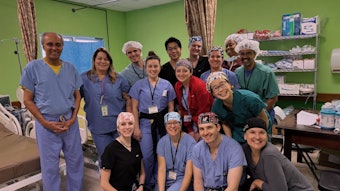
 A multidisciplinary team at Kibagabaga Hospital performs a thyroidectomy, highlighting the adaptability required to deliver specialized endocrine surgical care in resource-limited environments.
During a capacity-building initiative at Kibagabaga Hospital in Kigali, Rwanda, we had the opportunity to illustrate that high-quality thyroid surgery can be delivered safely across diverse settings when disciplined technique is paired with practical, evidence-based workflows and training. At Kibagabaga, POCUS had been used previously, but IONM had not. Introducing IONM (along with training in both IONM and perioperative ultrasound) reinforced the universal core priorities of safe thyroid surgery.
Kibagabaga Hospital serves a large population in Kigali with limited access to subspecialty surgical care. Before this, thyroid surgery was performed without IONM, and routine perioperative laryngoscopic assessment of vocal fold mobility was not available. Yet the operative goals were aligned with those of high-volume tertiary centers, including achieving oncologic adequacy when indicated, relieving compressive symptoms, and minimizing morbidity.
Drawing on our experience at Kibagabaga Hospital, we highlight how IONM, perioperative ultrasound, and structured training can reinforce universal thyroidectomy principles without altering the fundamentals of technique.
Preoperative Assessment
Accurate preoperative characterization of thyroid disease remains essential for operative planning, risk counseling, and determining surgical approach. High-resolution ultrasound is the primary modality for evaluating nodule features, cervical lymph nodes, extrathyroidal extension, and relevant anatomic variation. 8,9 When combined with molecular testing when appropriate and an assessment of baseline vocal fold function, surgeons can refine operative plans and anticipate risk more effectively.
POCUS is a valuable extension of this preoperative foundation. In settings where flexible laryngoscopy is not readily available, ultrasound-based assessment of vocal fold mobility can provide a practical method for perioperative functional evaluation and documentation. 10,11 During our initiative, perioperative ultrasound was incorporated into routine practice to support consistent pre- and postoperative assessment when direct laryngoscopic evaluation was not feasible.
Intraoperative Nerve Preservation
Protection of the RLN is a defining priority in thyroid surgery. While visual identification is the gold standard, IONM can complement visual identification to confirm neural function, map nerve trajectories, and support decision-making in higher-risk dissections.7 IONM does not replace sound technique, but when combined into a consistent workflow, it can improve intraoperative feedback and communication.
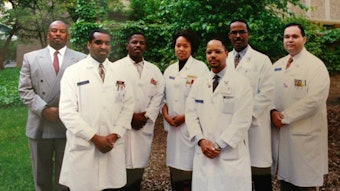
 Collaboration between U.S.-based otolaryngologists and Kibagabaga Hospital leadership and surgical staff focused on expanding access to specialized head and neck surgical care while fostering a sustainable exchange of medical knowledge and administrative best practices.
At Kibagabaga Hospital, we introduced IONM. Training emphasized endotracheal tube positioning, signal acquisition and interpretation, troubleshooting, and systematic RLN mapping. In routine practice, RLN preservation depends on careful capsular dissection, respect for tissue planes, and recognition of anatomic variants, including extralaryngeal branching and nonrecurrent laryngeal nerves. IONM complements these principles by providing functional confirmation during nerve identification, traction maneuvers, and completion of lobectomy, particularly when dissection is complex or anatomy is distorted.7
Parathyroid Preservation
Parathyroid injury and postoperative hypocalcemia remain common concerns after thyroidectomy. Prevention relies on gentle soft-tissue handling, preservation of the parathyroid blood supply, deliberate identification of glands when feasible, and autotransplantation when necessary.4 Adjuncts, such as autofluorescence and indocyanine green imaging, may assist but are not widely available in all environments.12,13 In Rwanda, without access to these adjuncts, the team relied on foundational surgical technique, judgment, and experience. This reinforced that parathyroid preservation is fundamentally a reproducible technical discipline rather than a technology-dependent outcome.
Hemostasis and Operative Field Management
In resource-constrained settings, standardization of hemostasis and operative flow is especially important because staffing, instrumentation, and rescue resources may be limited. We emphasized stepwise vessel control during capsular dissection, periodic reassessment of the operative field, and a deliberate final inspection prior to closure. A consistent hemostatic technique improved operative flow and supported safer, more reproducible execution. Postoperatively, POCUS was used selectively when there was concern for deep-space fluid collection, providing an additional safeguard in environments without continuous electronic monitoring.
Postoperative Functional Assessment
A structured approach to postoperative evaluation of the vocal fold and airway is essential. Early assessment identifies vocal fold paralysis or paresis, guides follow-up, and supports timely intervention when needed. Flexible laryngoscopy remains the reference standard, but laryngeal ultrasound is a practical alternative for many patients and can be especially useful when laryngoscopy access is limited.9,11,14 During our week in Rwanda, postoperative ultrasound assessment of vocal fold mobility was incorporated into routine care to support consistent documentation and evaluation of voice changes. When minor voice changes occurred, ultrasound helped clarify whether vocal fold mobility remained intact. As with any operator-dependent tool, POCUS requires training and quality reinforcement, but when embedded into a standardized regimen, it can expand access to meaningful perioperative functional assessment.
The Importance of Teaching
In low-resource environments, the impact of standardized training can be as important as the technology itself. Daily case reviews, IONM demonstrations, ultrasound teaching, and collaborative perioperative planning strengthened consistency across cases. For example, structured debriefs after each operation allowed the team to refine endotracheal tube positioning for IONM signal, reducing troubleshooting time and improving confidence in nerve mapping by the end of the week. This parallels the experience of high-volume endocrine centers, where standardization reduces variability and improves predictability and outcomes.15
Conclusion
Modern thyroid surgery combines anatomic precision with reproducible steps designed to protect RLN function, preserve parathyroid viability, maintain hemostasis, and safeguard postoperative voice and airway outcomes. Tools such as IONM and POCUS can strengthen these goals, but their value comes from reinforcing disciplined technique rather than replacing fundamentals. Our experience at Kibagabaga Hospital illustrates that when consistent technique, practical adjuncts, and structured teaching are integrated into routine practice, the foundations of safe thyroid surgery can be achieved across settings. At Kibagabaga and at high-volume academic centers alike, the environment may differ, but the commitment to nerve preservation, parathyroid protection, hemostasis, and functional outcomes remains constant.
References
- Sarkar S, Banerjee S, Sarkar R, Sikder B. A Review on the History of “Thyroid Surgery”. Indian J Surg. 2016;78(1):32-36. doi:10.1007/s12262-015-1317-5
- Chen DW, Lang BHH, McLeod DSA, Newbold K, Haymart MR. Thyroid cancer. Lancet. 2023;401(10387):1531-1544. doi:10.1016/S0140-6736(23)00020-X
- Jin S, Sugitani I. Narrative review of management of thyroid surgery complications. Gland Surg. 2021;10(3):1135-1146. doi:10.21037/gs-20-859
- Asya O, Yumuşakhuylu AC, Gündoğdu Y, İncaz S, Oysu Ç. Thyroid Surgery and Inadvertent Removal of Parathyroids. Indian J Otolaryngol Head Neck Surg. 2022;74(Suppl 3):6022-6026. doi:10.1007/s12070-021-02590-0
- Uludağ M, Tanal M, İşgör A. A Review of Methods for the Preservation of Laryngeal Nerves During Thyroidectomy. Sisli Etfal Hastan Tıp Bul. 2018;52(2):79-91. doi:10.14744/SEMB.2018.37928
- Shires CB, Boughter JD, Smith A, Sebelik ME. Head and Neck Ultrasound Utilization Rates: 2012 to 2019. OTO Open. 2023;7(4):e97. doi:10.1002/oto2.97
- Jung JY. Intraoperative Nerve Monitoring in Thyroid Surgery: A Comprehensive Review of Technical Principles, Anesthetic Considerations, and Clinical Applications. J Clin Med. 2025;14(9). doi:10.3390/jcm14093259
- Wei B, Yao J, Peng C, et al. Clinical features and imaging examination assessment of cervical lymph nodes for thyroid carcinoma. BMC Cancer. 2023;23(1):1225. doi:10.1186/s12885-023-11721-5
- Chaudhary V, Bano S. Thyroid ultrasound. Indian J Endocrinol Metab. 2013;17(2):219-227. doi:10.4103/2230-8210.109667
- Lin J, Bellinger R, Shedd A, et al. Point-of-Care Ultrasound in Airway Evaluation and Management: A Comprehensive Review. Diagnostics (Basel). 2023;13(9). doi:10.3390/diagnostics13091541
- Doyal AS, Sholes P, Drum E, Tesfay B, Sileshi B. Point-of-Care Ultrasound: A High-Tech Solution for Low- and Middle-Income Countries. Cureus. 2025;17(5):e83520. doi:10.7759/cureus.83520
- Karcioglu AS, Hartl D, Shonka DC, et al. Autofluorescence of Parathyroid Glands: A Review of Methods of Parathyroid Gland Identification and Parathyroid Vascular Assessment. Otolaryngol Clin North Am. 2024;57(1):139-154. doi:10.1016/j.otc.2023.07.011
- Pace-Asciak P, Russell J, Solorzano C, et al. The utility of parathyroid autofluorescence as an adjunct in thyroid and parathyroid surgery, 2023. Head Neck. 2023;45(12):3157-3167. doi:10.1002/hed.27538
- Su E, Hamilton C, Tawfik DS, et al. Laryngeal Ultrasound Detects Vocal Fold Immobility in Adults: A Systematic Review. J Ultrasound Med. 2022;41(8):1873-1888. doi:10.1002/jum.15884
- Stavrakis AI, Ituarte PHG, Ko CY, Yeh MW. Surgeon volume as a predictor of outcomes in inpatient and outpatient endocrine surgery. Surgery. 2007;142(6):887-899; discussion 887-899. doi:10.1016/j.surg.2007.09.003